4.9-Star Rated
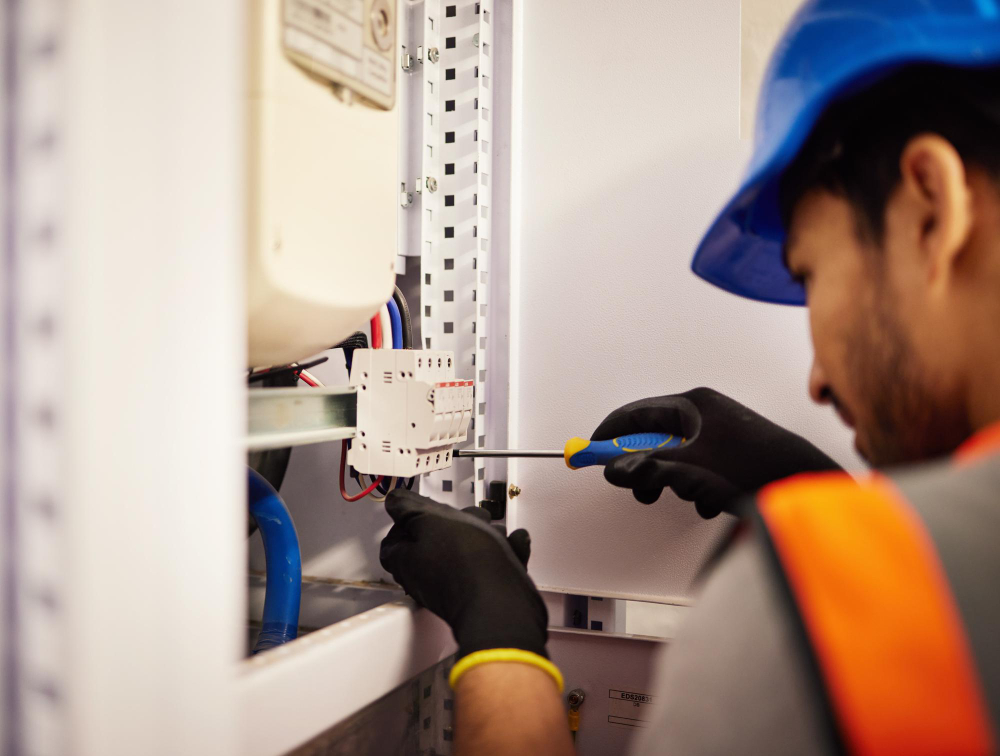
The electrical panel replacement signs in Tompkins County homes are not always dramatic. Some are quiet. A breaker that trips a little more often than it used to. A faint warmth on the panel cover that was not there before. A hum from the utility closet that no one can quite explain.
These are the kinds of things homeowners notice, dismiss, and forget about until the day they cannot ignore them anymore, and by then the problem is usually more expensive and more dangerous than it would have been if they had acted earlier.
Your electrical panel is the central point of your home's entire electrical system. Every circuit, every outlet, every appliance, and every device in the house draws power through it, and the breakers inside it are the only protection those circuits have against overloads, short circuits, and faults. When the panel is failing, nothing downstream is safe.
According to the U.S. Fire Administration, electrical malfunctions cause an estimated 24,200 residential fires each year across the country, resulting in roughly 295 deaths and over $1.5 billion in property losses. A significant share of those fires originate at or are enabled by electrical distribution equipment, which includes the panel, the breakers, and the connections inside it.
The NFPA identifies wire and cable insulation as the item that first ignites in roughly a third of home electrical fires, with electrical failure and malfunction as the leading contributing factor.
This article walks through the specific signs that a Tompkins County home's electrical panel needs replacement, explains why each one matters, and covers what the replacement process looks like.
In this article, you will learn about:
Keep reading to understand which warning signs require immediate attention and how to protect your home before a panel problem becomes an emergency.
Most homeowners think about their electrical system in terms of the things they interact with every day, the outlets, the switches, the lights, the appliances. The panel rarely enters the conversation because it sits behind a closed door in a basement or utility area, doing its work invisibly. But the panel is the one component whose failure affects everything else in the house simultaneously.
Understanding what the panel does and what happens when it degrades helps put the warning signs in proper context.
Your electrical panel receives power from the utility through the service entrance cable, distributes it across individual circuits through the bus bar, and protects each circuit with a breaker rated for the maximum current that circuit's wiring can safely carry. When current on a circuit exceeds the breaker's rating, the breaker trips and disconnects the circuit before the wiring can overheat.
That trip function is the panel's primary safety role, and it is not optional. Without it, an overloaded circuit continues drawing current until the wire insulation melts, the connection arcs, or the surrounding materials ignite. Every breaker in the panel is a gate between normal operation and potential fire, and the entire system depends on those gates working reliably.
When a panel ages, the internal components that make this system work begin to degrade. Bus bar connections loosen, breaker mechanisms lose calibration, insulation becomes brittle, and corrosion builds at contact points. Each of these changes reduces the panel's ability to perform its protective function, and the degradation is cumulative. A panel that has been in service for 30 or 40 years has absorbed decades of thermal cycling, current stress, and environmental exposure, all of which take a toll that is not visible from the outside.
There is no single expiration date stamped on an electrical panel, but industry consensus and real-world failure patterns point to a general threshold. Panels that have been in service for 25 to 30 years are entering the range where internal degradation starts to affect performance and safety. Panels over 40 years old are well into the range where replacement should be a priority.
The age of the panel matters for several reasons:
Age alone does not make a panel dangerous. But age combined with any of the warning signs described in this article creates a situation where replacement is the responsible course of action.
Tompkins County's housing market includes a wide range of construction eras, from century-old homes in the Ithaca neighborhoods of Fall Creek and Collegetown to mid-century builds in the surrounding towns and villages. Many of these homes have panels that were installed with the original construction or added during a renovation decades ago.
The climate adds stress that panels in more temperate regions do not face. Finger Lakes winters push temperatures well below zero, and summer humidity reaches levels that promote corrosion inside panel enclosures, especially in basement installations where moisture is persistent. Properties in Trumansburg, Lansing, Dryden, Groton, and across the rural portions of the county face these conditions consistently, and their panels absorb the effects year after year.
Homes that have been expanded, renovated, or had electrical loads added over the decades may also have panels that were adequate when installed but are now operating near or beyond their rated capacity. A home built with 100-amp service that now supports central air, a home office, a modern kitchen, and an EV charger is a home whose panel is working harder than it was designed to.
Some panel problems can be addressed with a targeted repair, a tightened connection, a replaced breaker, a corrected wiring issue. Others indicate that the panel itself has reached the end of its useful life and that replacement is the only appropriate response.
The signs below fall into the second category. If you observe any of them in your Tompkins County home, they warrant a professional evaluation by a licensed electrician, not a wait-and-see approach.
A breaker that trips once because of a genuine overload is working correctly. A breaker that trips repeatedly without an identifiable cause, or that trips under what should be a normal load, has a problem that goes beyond the circuit it serves.
Repeated tripping can indicate a failing breaker mechanism that is no longer calibrated correctly, a wiring fault inside the panel, a deteriorating connection at the bus bar, or a breaker that has weakened after years of thermal cycling and can no longer hold its rated current without nuisance tripping.
A breaker that will not reset at all, returning to the tripped position immediately after you flip it, indicates either a persistent fault on the circuit or a breaker that has failed internally. In either case, forcing it to stay on is dangerous. Leave it off, stop using that circuit, and call a licensed electrician.
If multiple breakers in your panel are exhibiting these behaviors, the problem is almost certainly the panel itself rather than individual circuits. That pattern points to bus bar degradation, internal connection issues, or widespread breaker wear, all of which are replacement-level conditions.
A burning smell near your electrical panel is one of the most serious warning signs your home can produce. It indicates that insulation, plastic components, or surrounding materials are being heated to the point of decomposition by an electrical fault or chronically overloaded connection inside the enclosure.
If the panel cover feels warm to the touch during normal operation, the heat buildup inside has reached a level that is radiating through the metal enclosure. Normal panels do not feel warm. This symptom indicates excessive current flow, loose connections generating resistance heat, or arcing at a contact point inside the panel.
Discoloration around the panel, particularly brown or black marks on the cover or the wall adjacent to the enclosure, is physical evidence that a heat event has occurred. This is not a condition that improves on its own, and it should prompt an immediate call for professional evaluation.
Do not open the panel cover to investigate. The internal components are energized at dangerous voltage levels, and investigating a panel with a known thermal problem creates a risk of shock or arc flash that only a trained professional should handle.
Electricity in a properly functioning panel is silent. If you hear buzzing, humming, or clicking from inside the panel enclosure, there is a problem at one or more connection points.
Buzzing typically indicates a loose connection where current is arcing across a small gap. The arc generates both the sound and heat, and the heat accelerates the deterioration of the connection. Humming may indicate an overloaded breaker or a breaker with a failing mechanism that is vibrating under load. Clicking sounds can indicate a breaker that is on the verge of tripping and is cycling between the on and trip positions under an intermittent fault.
These sounds are not harmless background noise. Each one represents an active electrical condition inside the panel that is generating heat, degrading components, or both. A panel producing these sounds needs professional attention promptly, not at the next convenient opportunity.
If you can see rust on the exterior of the panel enclosure, corrosion around the knockouts or conduit connections, or evidence of moisture intrusion such as water staining or mineral deposits, the internal condition of the panel is likely compromised.
Moisture inside a panel enclosure causes corrosion on bus bars, breaker contacts, neutral bars, and grounding connections. Corroded connections create resistance, resistance generates heat, and heat in a confined enclosure surrounded by wire insulation and combustible wall materials is a fire risk.
Basement and garage panel installations are most susceptible to moisture problems, and Tompkins County's climate, with its freeze-thaw cycles, spring snowmelt, and summer humidity, makes these installations especially vulnerable.
A panel with visible moisture damage should be evaluated and, in most cases, replaced. Cleaning and treating corroded connections may buy time, but it does not address the underlying moisture intrusion or restore corroded components to their original conductivity and reliability.
Not all panel replacement signs announce themselves with smells, sounds, or visible damage. Some are conditions that have been present since the panel was installed or that developed so gradually they seem normal. They are not. Each of the following conditions is a replacement-level concern, even if the panel appears to be functioning without symptoms.
A licensed electrician identifies these during a professional evaluation, which is why periodic electrical inspections are so important for older homes.
Federal Pacific Electric panels with Stab-Lok breakers and Zinsco panels are two brands with well-documented histories of breaker failure. The U.S. Consumer Product Safety Commission investigated Federal Pacific in the 1980s after testing found that 51 percent of tested Stab-Lok breakers failed to trip under overload conditions. Zinsco panels have a different failure mode in which breakers overheat and fuse to the aluminum bus bar, becoming permanently unable to trip.
Neither brand was formally recalled, but the consensus among home inspectors, insurance carriers, and electricians is that both should be replaced. Many insurance companies will not write or renew a policy on a home with one of these panels, and home inspectors routinely flag them as a condition requiring immediate attention.
If your Tompkins County home was built between the 1950s and 1980s, check the label on your panel door. If you see "Federal Pacific," "FPE," "Stab-Lok," "Zinsco," "Sylvania," or "GTE-Sylvania," contact a licensed electrician for a panel evaluation.
Fuse-based panels predate breaker technology and were standard in homes built before the 1960s. Fuses work by melting a metal element when current exceeds the rated amperage, which disconnects the circuit. The technology is functional but has significant limitations.
Fuses are single-use. Every time a circuit overloads, the fuse must be replaced. This creates an incentive to install a higher-rated fuse than the circuit's wiring can safely support, a practice called over-fusing that eliminates the protection the fuse is supposed to provide. A 15-amp circuit with a 30-amp fuse will not blow until the wiring is carrying twice its safe capacity, and by then the insulation may already be damaged.
Fuse panels also lack the AFCI and GFCI protection that modern code requires. They cannot be retrofitted with these safety devices because the panel architecture does not support them. Replacement with a modern breaker panel is the only path to bringing the system up to current safety standards.
A full panel with no available breaker slots is a panel that has reached its functional limit. When every slot is occupied and the homeowner needs another circuit, the options within the existing panel are limited to workarounds that compromise safety.
Tandem breakers, which fit two circuits into a single slot, are sometimes acceptable depending on the panel's design, but they are often installed in panels that are not rated for them. Sub-panels can extend capacity, but they do not address the underlying limitation of the main panel. Extension cords and power strips become permanent fixtures because there are not enough outlets on enough circuits to serve the home's actual electrical needs.
A panel with no room to grow is a panel that has been outgrown by the home it serves. Upgrading to a 200-amp panel with 40 or more breaker slots provides the capacity and flexibility the home needs now and the room to accommodate future additions.
A double-tapped breaker has two wires connected to a terminal designed for one. This is a code violation and a fire hazard because the connection cannot be properly tightened with two wires under a single lug. One or both wires may loosen over time, creating resistance and heat at the contact point.
Other improvised conditions found in aging panels include:
These conditions are common in panels that have been modified over the decades by multiple hands, not all of them licensed. Each one represents a departure from safe practice, and collectively they indicate a panel that needs replacement and a fresh start with proper, code-compliant connections throughout.
Ignoring a panel replacement sign does not make the underlying condition go away. It allows the condition to progress, and the progression of an electrical fault is always toward more heat, more degradation, and higher risk. Understanding the trajectory helps clarify why acting on warning signs early is so much better than waiting.
The consequences of deferral are not theoretical. They are documented in fire statistics, insurance claims, and emergency repair invoices.
A loose connection at the bus bar generates a small amount of excess heat. That heat causes the connection to loosen further, which generates more heat. Over weeks and months, the temperature at that contact point rises until the surrounding wire insulation begins to degrade. Degraded insulation exposes the conductor, which can arc to an adjacent conductor or to the grounded panel enclosure.
An arc inside a panel enclosure produces intense, localized heat that can ignite the wire insulation, the panel's plastic components, and the surrounding wall materials. According to the NFPA, arc faults from defective insulation, faulty contacts, and broken connectors are among the leading factors contributing to electrical fires in homes.
This progression does not happen overnight, which is both the good news and the danger. The slow pace makes it easy to ignore because nothing catastrophic happens today. But the condition is advancing every day the panel operates, and the outcome is not uncertain. It is only a question of when.
Insurance carriers take electrical panel condition seriously because electrical fires are expensive, predictable, and preventable. A home with a known-hazard panel brand, an outdated fuse box, or documented panel deficiencies may face:
For landlords with rental properties in Tompkins County, the liability exposure is even greater. A tenant injured or killed in a fire linked to a deficient electrical panel creates significant legal exposure for the property owner, especially if the panel's condition was known or should have been known through routine maintenance.
A planned panel upgrade, scheduled at the homeowner's convenience with time to evaluate, quote, permit, and install, is a predictable expense with a defined scope. An emergency panel replacement, triggered by a failure, a fire, or an insurance ultimatum, is substantially more expensive.
Emergency work carries urgency pricing, after-hours rates, and the added cost of diagnosing a problem under pressure rather than on a scheduled visit. If the panel failure caused collateral damage, such as fried electronics, smoke damage, or wiring that needs to be repaired along with the panel, the total cost multiplies rapidly.
The planned approach also gives you the benefit of choosing your electrician, scheduling the work at a time that minimizes disruption, and making informed decisions about features like AFCI protection, surge protection, and circuit layout. The emergency approach gives you none of that.
A panel replacement is a defined, well-understood process that a licensed electrician performs routinely. Knowing what to expect at each stage removes the uncertainty that sometimes keeps homeowners from acting on the signs they have already noticed.
The process starts with an evaluation and ends with a permitted, inspected, code-compliant system that protects your home for decades to come.
Before any work is quoted, a licensed electrician evaluates your current system in person. The evaluation covers the panel's brand, age, and condition, the service entrance cable and meter base, the grounding system, and a load calculation based on your home's actual and anticipated electrical demand.
This evaluation determines whether the panel alone needs replacement or whether the service entrance, meter base, or grounding system also need upgrading to support the new panel and meet current code. In some cases, a straightforward panel swap is all that is needed. In others, the full service from the meter to the panel needs to be brought up to the standard the new equipment requires.
The evaluation also identifies any conditions in the home's wiring that should be addressed during the upgrade, such as circuits that need AFCI or GFCI protection, oversized breakers on undersized wiring, or circuits that need to be split or dedicated.
A standard residential panel upgrade to 200-amp service includes:
The result is a panel that provides full capacity for your home's current electrical demands, room for future additions, and every safety feature the current code requires. It is a complete reset of the component that protects everything else in your electrical system.
Panel upgrades require a permit from the local building department. The electrician handles the permit application as part of the project. Once the work is complete, a code inspection verifies that every aspect of the installation meets the National Electrical Code and any local amendments.
On installation day, expect the power to be off for several hours while the electrician removes the old panel, installs the new one, reconnects every circuit, and tests the complete system. The utility coordinates the disconnection and reconnection at the meter. Most residential panel replacements are completed in a single day.
After the inspection passes, you receive the permit documentation and inspection results, which become part of your home's permanent record. That documentation is valuable for insurance, resale, and any future electrical work on the property.
For homeowners across Cortland, Trumansburg, Elmira, and the broader Finger Lakes region, the process is the same and the benefits are identical.
The electrical panel replacement signs described in this article are not minor maintenance items. They are indicators that the component responsible for protecting every circuit in your home is no longer performing reliably. Breakers that trip without cause, warmth or smells at the panel, buzzing sounds, visible corrosion, known-hazard panel brands, fuse boxes, and panels with no room to grow are all conditions that warrant professional evaluation and, in most cases, replacement.
Tompkins County's aging housing stock, its seasonal climate stress, and the growing gap between original panel capacity and modern electrical demand make these signs especially common and especially important to act on. The homes that avoid electrical emergencies are the ones where the warning signs were taken seriously before they escalated.
If you have noticed any of the signs in this article, if your panel is more than 25 years old, or if you simply want a professional assessment of where your system stands, now is the right time to schedule an evaluation.
Pleasant Valley Electric has been providing licensed electrical service across Tompkins County and the Finger Lakes since 1983. Call (607) 272-6922 to speak with a real person who can evaluate your panel, answer your questions, and help you make the decision that protects your home for the long term.
Whether you are dealing with flickering lights, outdated wiring, breaker problems, or planning a larger electrical upgrade, Pleasant Valley Electric is here to help. Our licensed electricians provide dependable service, honest recommendations, and fast response times throughout Ithaca and surrounding communities.
We call you back within 30 minutes during business hours.