4.9-Star Rated
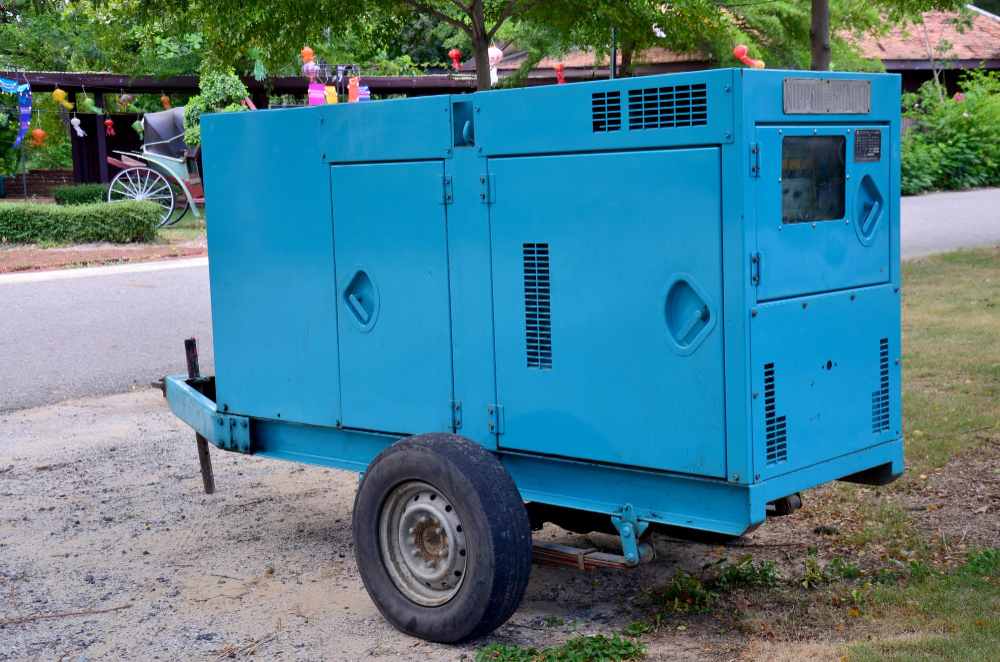
Generator readiness tips for storm season in Tompkins County come down to one idea: the time to find out whether your generator works is not during the storm. It is weeks or months before the storm, when you still have time to test the system under real load, replace a weak battery, service the engine, and confirm the transfer switch does its job. A generator that has not been professionally maintained is a generator that may or may not start when the power goes out, and in the Finger Lakes, the power goes out often enough that "may or may not" is not an acceptable answer.
Tompkins County sees outage events driven by ice storms, high winds, thunderstorms, and aging utility infrastructure throughout the year, with the heaviest concentration falling between late fall and early spring for winter weather and June through August for severe thunderstorms. Just weeks ago, a storm ripped through the county and left nearly 4,800 NYSEG customers without power at its peak. In July 2025, another storm knocked out power to over 3,600 households, with downed trees and wires across multiple roadways.
If your home has a standby or portable generator, these events are exactly what it exists for. The question is whether it is actually ready.
In this article, you will learn about:
Keep reading to make sure your backup power system is ready to perform the next time the grid goes down in your neighborhood.
Tompkins County is not a place where power outages are rare inconveniences. They are a recurring part of life, driven by geography, climate, and an aging grid that serves a heavily forested, hilly region with long stretches of overhead power lines exposed to everything the Finger Lakes weather cycle delivers.
A generator that sits untested and unmaintained in that environment is not backup power. It is a hope, and hope is not a reliable source of electricity when temperatures drop below zero or a summer storm drops trees across power lines.
Tompkins County faces two distinct storm seasons that drive generator demand.
Winter brings ice storms, heavy snow, and high winds that weigh down and snap tree limbs onto power lines. In December 2025, a winter storm prompted a state of emergency across more than two dozen New York counties, with Tompkins County under a winter weather advisory for snow, sleet, and icy conditions. These events can leave neighborhoods without power for 24 hours or longer, and in rural parts of the county, restoration can take even more time.
Summer brings severe thunderstorms with damaging winds, lightning, and occasional tornado warnings. According to NOAA climate data, New York averages 30 thunderstorm days per year, above the national average. The Finger Lakes region sits in a corridor where summer convective storms can develop rapidly, and the combination of tall trees and overhead utility lines means that power outages follow almost every significant storm.
The U.S. Energy Information Administration reported that U.S. electricity customers experienced an average of about 11 hours of power interruptions in 2024, nearly double the annual average over the prior decade. Tompkins County's outage history suggests that many local households exceed that number in a single bad storm.
A standby generator that has been properly maintained starts automatically within seconds of an outage, transfers your home's electrical load to generator power, and runs until the utility restores service. That is what it is designed to do.
A neglected generator does something else entirely. It may not start because the battery is dead. It may start but stall under load because the fuel system is clogged. It may run for a few minutes and overheat because the coolant is low or the oil has degraded. It may fail to transfer power because the automatic transfer switch has not been exercised or inspected.
According to the National Fire Protection Association, battery failure is the single most common cause of generator failure. The Pacific Northwest National Laboratory, which operates under the U.S. Department of Energy, states directly that neglecting proper maintenance of standby generators can result in premature system failure and a lack of power during an outage. Every failure mode listed above is preventable with routine service.
Not all parts of Tompkins County lose power for the same duration. Within the county, restoration times vary significantly based on location, line access, and the nature of the damage.
Properties in the more rural parts of the county, including the outer reaches of Lansing, Newfield, Enfield, and Danby, tend to see longer restoration times because utility crews prioritize high-density areas first and because the infrastructure serving those roads is often single-line with limited redundancy. Tree-heavy areas face additional delays because crews have to clear downed limbs and trees before they can even access damaged lines.
For homes in these areas, a working generator is not a convenience. It is the difference between riding out a multi-day outage safely and dealing with frozen pipes, flooded basements from idle sump pumps, lost food, and no heat or cooling. Properties in Trumansburg, Cayuga Heights, Dryden, Groton, and the surrounding communities face similar exposure and benefit equally from a well-maintained backup power system.
Whether storm season for your household means winter ice or summer thunderstorms, the preparation is the same. The checklist below covers the critical points that determine whether your generator performs when called on. Some items you can handle yourself. Others require a licensed electrician or generator technician.
Do not wait until a storm is in the forecast to run through this list. By then, if something needs repair or replacement, you are already too late.
Your generator's automated weekly self-test runs the engine for a few minutes at idle or low load. That exercise keeps the engine lubricated, charges the battery, and confirms the unit starts. What it does not do is prove the system can carry your home's actual electrical load.
A full load test applies real or simulated demand to the generator and verifies that it produces stable voltage and frequency while powering the circuits that matter. Without periodic load testing, a generator can develop wet stacking, where unburned fuel accumulates in the exhaust because the engine never works hard enough to reach proper combustion temperature. Over time, wet stacking fouls components and reduces reliability.
The NFPA 110 standard recommends running generators under at least 30 percent of rated load during monthly testing to prevent this condition. For residential standby generators, a practical approach is to have your electrician or technician run the system under building load during your annual service visit, which simultaneously tests the generator, the transfer switch, and the circuits it feeds.
If there is one component that deserves more attention than any other, it is the battery. A generator with a dead or weak battery will not start, period. The rest of the system can be in perfect condition, but if the battery cannot deliver enough cranking power, the generator sits silent while the storm rages.
Battery health degrades over time regardless of use. Cold weather accelerates the decline because chemical reactions slow down in low temperatures, reducing the battery's available power at the exact moment it needs to deliver the most. Most standby generator batteries need replacement every two to three years, but testing on a regular schedule catches the decline before it reaches the failure threshold.
A pre-storm-season battery check should include:
If your battery is more than two years old and has not been tested recently, replace it. The cost of a new battery is negligible compared to the consequences of a no-start condition during an outage.
The fuel system, lubrication system, and air filtration all need to be in good condition for the generator to run reliably under extended load. Each of these components degrades over time, and the degradation accelerates if the generator sits idle for long stretches between outages.
For natural gas generators, the fuel supply connection should be inspected for leaks, and the gas pressure should be verified. For propane systems, the tank level should be checked and refilled if necessary. Running out of fuel during an outage is avoidable with basic planning but surprisingly common.
Oil breaks down over time even without heavy runtime. If the oil has not been changed within the manufacturer's recommended interval, it should be changed before storm season. The oil filter and air filter should be replaced at the same time. Dirty oil reduces lubrication effectiveness and increases engine wear, while a clogged air filter restricts airflow and can cause the engine to run rich, reducing efficiency and fouling components.
A licensed technician performing annual generator maintenance handles all of these items as part of the standard service scope.
The automatic transfer switch is the component that detects a utility outage, signals the generator to start, and transfers your home's electrical load from the grid to generator power. When the utility restores service, the transfer switch reverses the process.
A transfer switch that has not been exercised and inspected can stick, fail to detect an outage, or fail to complete the transfer. Contacts inside the switch wear over time, and mechanical components can bind if they are not periodically operated. A failed transfer switch means the generator may start and run perfectly but never actually deliver power to your home.
During a professional service visit, the technician should test the transfer switch by simulating an outage, verifying that it activates the generator, completes the load transfer, and reverses cleanly when utility power returns. If the transfer switch shows signs of wear, contact degradation, or intermittent operation, it should be repaired or replaced before storm season.
Generator readiness is not a one-time task. It is a cycle of professional service, homeowner checks, and post-event verification that keeps the system ready across every season. The timing of each step matters, because the goal is always to catch and correct issues before the next outage puts the system to the test.
Tompkins County's dual storm seasons, winter and summer, mean there are two natural windows for preparation and two periods of peak demand.
If you are going to schedule one professional service visit per year, early fall is the strongest choice for Tompkins County. Winter storms are the primary driver of extended outages in the region, and an early fall service ensures the generator is fully prepared before the first ice event.
A fall service visit covers the full maintenance scope: oil and filter change, fuel system inspection, battery testing and replacement if needed, coolant check, exhaust inspection, electrical connection tightening, transfer switch testing, and a load test. The technician also verifies that the engine block heater is functioning, which is critical for cold-weather starting.
For homeowners who want maximum protection, adding a second service visit in late spring prepares the system for summer thunderstorm season and provides a mid-year check on components that wear between annual visits.
Between professional visits, a brief monthly check keeps you connected to the system's condition without requiring technical expertise:
These observations take a few minutes and catch obvious problems early. A warning light that appears after a self-test, a puddle of oil under the unit, or a rodent nest in the enclosure are all things you want to discover on a calm Tuesday, not during a January ice storm.
After any significant weather event, whether or not your generator activated during the outage, take a few minutes to verify the system is ready for the next one:
Storms often come in clusters, especially during summer thunderstorm season and the transitional weather of late fall and early spring. Confirming the system is ready after one event protects you from being caught unprepared by the next.
Even homeowners who take generator ownership seriously can fall into patterns that undermine the system's readiness. These are not acts of neglect. They are reasonable-sounding assumptions that happen to be wrong, and they account for a large portion of generator failures during actual outages.
Recognizing these mistakes is the first step toward avoiding them.
The weekly self-test is an important function. It exercises the engine, circulates oil, charges the battery, and confirms the unit starts. But it runs at idle or very low load, typically for 10 to 15 minutes, and it does not test the system's ability to carry your home's actual electrical demand.
A generator that passes its self-test every week for years can still fail under load. Fuel delivery problems, weak voltage regulation, degraded connections, and transfer switch issues do not show up at idle. They show up when the system transitions from test mode to full-demand operation, which is exactly what happens during a real outage.
This is why the Pacific Northwest National Laboratory recommends periodic testing under building load in addition to the weekly self-test. The load test is the only way to verify end-to-end performance from the generator engine through the transfer switch to the circuits in your home.
Every generator manufacturer publishes recommended service intervals for oil changes, filter replacements, coolant checks, spark plug replacement, and major component inspections. These intervals are based on engineering data about how the components in that specific system degrade over time and under use.
Skipping or stretching these intervals saves money in the short term but costs significantly more in the long term. Degraded oil causes accelerated engine wear. Clogged filters restrict fuel and air flow. Neglected coolant loses its protective properties. The cumulative effect of deferred maintenance is a system that has been slowly deteriorating and is far more likely to fail when it is needed most.
Follow the manufacturer's schedule as a minimum. In Tompkins County, where environmental conditions include temperature extremes, humidity, and seasonal debris, the maintenance needs may actually exceed the baseline recommendations. A technician familiar with local conditions can advise whether your system would benefit from a tighter schedule.
Homeowners and even some service providers focus on the generator engine during maintenance and overlook the automatic transfer switch entirely. This is a critical gap. The transfer switch is an electromechanical device with contacts that wear, connections that loosen, and control logic that can fail, just like any other component in the system.
A generator that starts perfectly but cannot transfer power to your home because the switch has failed is a generator that is not doing its job. Transfer switch inspection, testing, and contact maintenance should be a standard part of every service visit. If your current service provider does not include the transfer switch in their maintenance scope, bring it up or find a provider who does.
The NFPA 110 standard addresses transfer switch maintenance as part of the overall emergency power supply system, reinforcing that the switch is not a secondary component. It is integral to the system's ability to deliver power when needed.
Not every home in Tompkins County has a permanently installed standby generator. Many homeowners rely on portable generators during outages, and these units are effective when used correctly. But portable generators carry serious safety risks that standby systems do not, and those risks are amplified during the exact conditions that cause outages: storms, cold, darkness, and urgency.
If you use a portable generator, understanding and following these safety rules is not optional. It is the difference between a safe outage and a life-threatening one.
Portable generators produce carbon monoxide, a colorless, odorless gas that can kill in minutes in an enclosed or semi-enclosed space. According to the U.S. Consumer Product Safety Commission, an average of nearly 100 people die in the United States each year from CO poisoning caused by portable generators, making generators the single consumer product most frequently associated with carbon monoxide deaths.
Most of these fatalities occur during power outages, when homeowners run generators inside garages, basements, porches, or too close to windows and doors. The urgency of restoring power during a storm leads people to take shortcuts that put their families at immediate risk.
There is no safe way to operate a portable generator indoors. Even with a garage door open, CO concentrations can reach lethal levels within minutes. The generator must be operated outdoors, at least 20 feet from any window, door, or vent, with the exhaust pointing away from the home. Every home that uses a portable generator should have working carbon monoxide detectors on every level, with battery backup so they function during the outage itself.
Beyond CO safety, portable generators require careful handling of fuel and electrical connections:
Operate the generator on a dry, level surface, protected from rain but never enclosed. Generator covers and canopy setups designed for weather protection are available and allow operation in rain without creating an enclosure that traps CO.
If you use a portable generator regularly, if your area loses power multiple times per year, or if anyone in your household depends on medical equipment that requires continuous power, a permanently installed standby generator with an automatic transfer switch is the safer and more reliable long-term solution.
A standby system eliminates every major risk associated with portable generators. It starts automatically, so there is no setup in the dark or cold. It connects to your home through a hardwired transfer switch, so there is no backfeed risk and no extension cords. It runs on your home's existing natural gas or propane supply, so there is no fuel handling. And it produces exhaust through a permanently positioned outlet that is sited away from living spaces during installation.
For homeowners in the Ithaca, Cortland, and Trumansburg areas, a professional generator installation assessment starts with a load calculation to determine the right size system for your home and a site evaluation to determine the best placement. The investment pays for itself in safety, convenience, and peace of mind across years of Tompkins County storm seasons.
Generator readiness is not complicated, but it is not automatic either. A system that sits in your yard running a brief self-test once a week can look ready from the outside while carrying battery, fuel, coolant, and transfer switch issues that only surface during a real outage. The readiness tips in this article exist to close that gap, to make sure the system you invested in actually performs when Tompkins County's next storm takes the grid down.
The pattern is straightforward. Schedule professional maintenance before the peak season. Test the system under real load. Replace the battery on schedule. Inspect fuel, oil, and filters. Verify the transfer switch. Check the system after every significant weather event. These steps take little time and cost a fraction of what a generator failure during an outage costs in damage, discomfort, and emergency repairs.
If your generator has not been professionally serviced in the past year, if you have noticed anything unusual during a self-test cycle, or if you want to discuss whether a standby installation makes sense for your property, Pleasant Valley Electric has been providing licensed electrical service across Tompkins County since 1983. Call (607) 272-6922 to speak with a real person who can evaluate your system, schedule maintenance, and help you get storm-ready before the next event hits your neighborhood.
Whether you are dealing with flickering lights, outdated wiring, breaker problems, or planning a larger electrical upgrade, Pleasant Valley Electric is here to help. Our licensed electricians provide dependable service, honest recommendations, and fast response times throughout Ithaca and surrounding communities.
We call you back within 30 minutes during business hours.