4.9-Star Rated
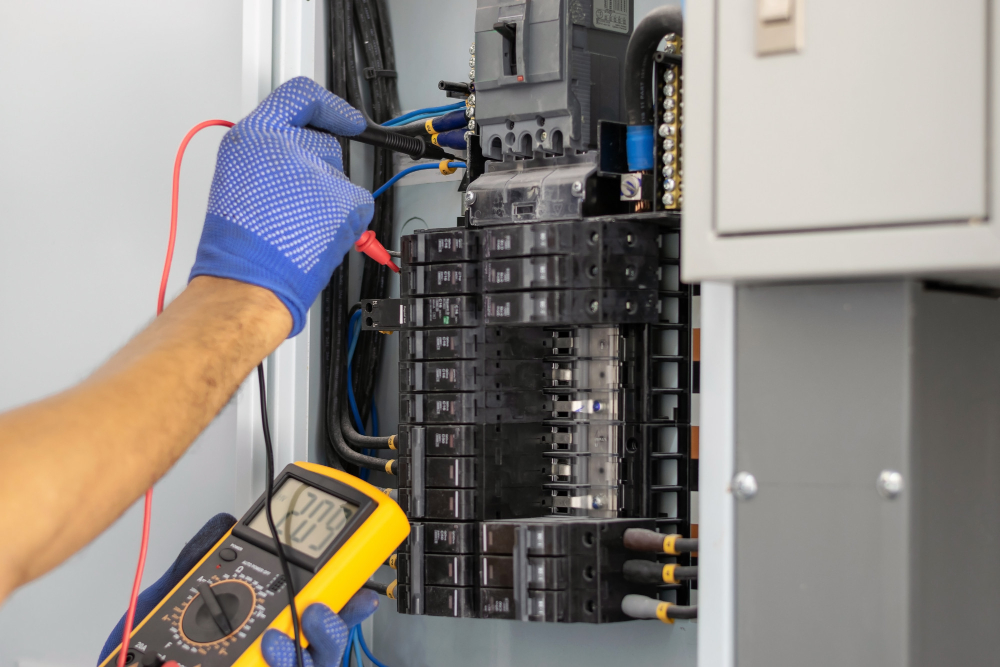
Electrical panel upgrades improve safety in Trumansburg residences by replacing the one component that every circuit in your home depends on. Your electrical panel distributes power to every outlet, switch, appliance, and device in the house, and the breakers inside it are the primary line of defense against overloads, short circuits, and the kind of electrical faults that start fires. When that panel is outdated, undersized, or worn out, every circuit it feeds carries more risk than it should.
Trumansburg's housing stock includes homes spanning more than a century of construction, and many of those homes are still operating on panels that were sized for a different era of electrical demand.
A 60-amp fuse box installed in the 1950s or a 100-amp panel from the 1970s was adequate when the heaviest electrical loads in the house were a refrigerator and a few light fixtures. It is not adequate for a modern household running central heating, air conditioning, a full kitchen, computers, and dozens of connected devices.
According to the U.S. Fire Administration, electrical malfunctions cause an estimated 24,200 residential fires annually in the United States, resulting in roughly 295 deaths and over $1.5 billion in property losses. Wire and cable insulation is the item that first ignites in nearly a third of those fires, and overloaded or deteriorating electrical systems are a leading contributing factor.
This article explains how a panel upgrade addresses those risks directly, what modern panels include that older ones lack, and what the process looks like for a Trumansburg home.
In this article, you will learn about:
Keep reading to understand why upgrading your electrical panel is one of the highest-impact safety improvements available to any homeowner, and what it means for the long-term protection of your home.
An electrical panel does not look like it is failing. There is no warning light, no beeping, and no visible countdown. The panel sits in a closet, a basement, or a utility room, doing its job quietly until it cannot do it anymore. The problems developing inside an aging panel are invisible until they produce symptoms, and those symptoms are often the same warning signs that precede electrical fires.
Understanding what happens inside an older panel explains why the upgrade is worth doing even when the current system appears to be working fine.
Every electrical connection inside your panel carries current, and current generates heat. Over years and decades, that heat causes connections to expand and contract repeatedly, which loosens them incrementally. A loose connection generates more heat than a tight one because electricity has to arc across the small gap, and that additional heat accelerates the cycle.
Breaker connections to the bus bar, neutral and ground connections, and the main service lugs are all subject to this process. In a panel that has been in service for 30 or 40 years, the cumulative loosening can be significant, even if no individual connection has failed outright.
Corrosion compounds the problem. Moisture intrusion, especially in basement and garage installations common in Trumansburg homes, oxidizes copper and aluminum connections and creates resistance at contact points. Resistance generates heat, and heat in a panel enclosure has nowhere to dissipate effectively.
The insulation on the wiring inside the panel also degrades with age. As it becomes brittle and cracks, the risk of arcing between conductors increases. These are not conditions you can see from the outside of the panel, and they are not conditions that announce themselves before they become dangerous.
Beyond general age-related degradation, certain panel brands manufactured during the mid-20th century carry specific, documented safety concerns that make replacement especially urgent.
Federal Pacific Electric panels, marked with the "Stab-Lok" label, were installed in millions of homes between the 1950s and 1980s. The U.S. Consumer Product Safety Commission investigated these panels after independent testing found that a substantial portion of Stab-Lok breakers failed to trip under overload conditions. In testing conducted during the CPSC investigation, 51 percent of tested breakers failed to trip when they should have. A New Jersey court later ruled that Federal Pacific knowingly distributed breakers that did not meet UL safety standards.
Zinsco panels, installed widely during the 1970s, have a different but equally serious problem. The breakers can overheat, fuse to the aluminum bus bar inside the panel, and become permanently stuck in the on position, unable to trip even during a severe overload.
Neither brand was formally recalled, but the documented failure rates and the consensus among home inspectors, electricians, and insurance carriers make replacement the standard recommendation. If your Trumansburg home has a Federal Pacific or Zinsco panel, upgrading it is not an improvement. It is a correction of a known hazard.
Many older Trumansburg homes were built with 60-amp or 100-amp electrical service. At the time, that capacity was sufficient. Today, a household with central air conditioning, an electric range, a dryer, a home office, and the standard complement of modern electronics routinely draws loads that approach or exceed 100 amps during peak demand.
When a panel operates chronically near its rated capacity, several things happen:
An undersized panel does not just limit what you can plug in. It creates the thermal and electrical conditions that lead to wiring failures and fires. Upgrading to 200-amp service eliminates this constraint and provides the capacity your home actually needs.
A modern electrical panel is not just a bigger version of the one it replaces. It includes safety technologies that did not exist when most older panels were installed, and those technologies address the specific failure modes that cause the majority of residential electrical fires.
Understanding what these features do and why they matter helps you see the upgrade as more than a capacity improvement.
Standard circuit breakers protect against two conditions: overloads, where too much current flows through the circuit, and short circuits, where a fault creates a direct low-resistance path. What standard breakers do not detect is arcing, the electrical sparks that occur when current jumps across a gap in damaged wiring, a loose connection, or a cracked conductor.
Arc faults are the ignition source behind a significant portion of residential electrical fires. The NFPA identifies arc faults from defective insulation, faulty contacts, and broken connectors as leading factors contributing to electrical fires in homes.
Arc-fault circuit interrupter breakers detect the distinctive electrical signature of an arc and shut off the circuit before the arc can ignite surrounding materials. The National Electrical Code now requires AFCI protection in virtually all living spaces, including bedrooms, living rooms, dining rooms, hallways, and closets.
Most older panels have no AFCI protection on any circuit. A panel upgrade gives you the opportunity to install AFCI breakers throughout the home, adding a layer of fire protection that addresses the failure modes standard breakers cannot detect.
Ground-fault circuit interrupter protection prevents electrical shock by detecting current leakage, the condition that occurs when electricity finds an unintended path to ground, often through a person who has come into contact with a faulty device or fixture near water.
GFCI protection is required by code in kitchens, bathrooms, garages, basements, laundry rooms, and all outdoor receptacles. Many older homes lack GFCI protection in some or all of these locations because the requirement was not in place when the home was built or the panel was installed.
During a panel upgrade, the electrician can install GFCI breakers at the panel that protect entire circuits, ensuring that every outlet in a wet or damp location has the shock protection the code requires. This is often more practical and more reliable than retrofitting individual GFCI outlets throughout the house, especially in older homes where the wiring configuration makes outlet-level GFCI installation difficult.
The 2020 National Electrical Code requires a Type 1 or Type 2 surge protective device for all services supplying dwelling units when the service equipment is new or replaced. This means a panel upgrade automatically triggers the surge protection requirement, and the SPD is installed as part of the project.
Surge protection at the panel intercepts voltage spikes from lightning, utility grid events, and power restoration after outages before they travel through your home's wiring and reach your electronics and appliances. According to the NEMA Surge Protection Institute, 60 to 80 percent of power surges originate inside a building from appliances cycling on and off, and a panel-level SPD addresses both internal and external surges.
For Trumansburg homes that experience seasonal power fluctuations from Finger Lakes thunderstorms and winter storms, whole-house surge protection is a significant safety and property protection benefit that comes built into the panel upgrade.
The safety features described above work together to address the conditions that cause most residential electrical fires. But the upgrade also delivers fire protection through more fundamental improvements: proper breaker function, properly rated connections, and the elimination of chronic heat buildup.
These benefits apply regardless of your current panel's brand or age.
The most basic function of a circuit breaker is to cut power when current exceeds the circuit's safe limit. Every breaker in your panel is rated for a specific amperage, and when current exceeds that rating, the breaker's internal mechanism should trip and disconnect the circuit.
In older panels, breaker mechanisms wear out over time. Springs lose tension, contacts corrode, and the thermal elements that detect overloads lose calibration. A breaker that is supposed to trip at 20 amps may not trip until 25 or 30, and that gap is enough to overheat wiring that was sized for 20 amps.
New breakers in a modern panel trip reliably at their rated amperage because the mechanisms are fresh, properly calibrated, and manufactured to current standards. This is the foundation of circuit protection, and it is restored with every panel upgrade.
A panel upgrade is not just a breaker swap. It involves replacing the bus bar, the main lugs, the neutral and ground bars, and every connection point inside the enclosure. The new panel's internal components are rated for the full capacity of the upgraded service, typically 200 amps.
That means every connection inside the panel is carrying current well within its design limits rather than operating near maximum capacity. Connections operating within their rated limits generate less heat, experience less thermal expansion and contraction, and last longer before loosening or degrading.
The electrician also makes fresh, clean connections at every terminal, which eliminates the accumulated loosening, corrosion, and oxidation that develops over decades of operation. Fresh connections on new equipment are inherently safer than old connections on old equipment.
Many of the conditions that lead to electrical fires originate at the panel and propagate through the home's wiring. An overloaded panel feeds overloaded circuits. A breaker that does not trip allows a wiring fault to persist. A corroded connection at the panel creates voltage imbalance that stresses connections downstream.
A panel upgrade addresses these conditions at their source. Properly sized service, properly rated breakers, fresh connections, and modern safety devices like AFCI and GFCI breakers work together to ensure that the electrical system operates within its design parameters from the panel to the farthest outlet.
For homes in Trumansburg and across the broader Tompkins County area, where older wiring and seasonal temperature extremes create additional stress on electrical systems, a panel upgrade removes the weakest link in the chain and replaces it with equipment designed for the demands the home actually faces.
Safety is the primary reason to upgrade an electrical panel, and it is reason enough on its own. But the upgrade delivers practical benefits beyond fire and shock protection that affect how you use your home, what it costs to insure, and what it is worth on the market.
These benefits make the investment even more justified for homeowners who are weighing the decision.
A 200-amp panel with available breaker slots gives you the capacity to add circuits for equipment and systems that a full or undersized panel cannot support. Common additions that require dedicated circuits include:
Without available capacity and breaker slots, each of these additions requires workarounds that compromise safety, such as shared circuits, extension cords, or tandem breakers squeezed into a panel that was never designed for them. A panel upgrade eliminates those compromises and gives you clean, dedicated, properly protected circuits for whatever your home needs now and in the future.
Insurance carriers assess the electrical system as a key factor in underwriting residential policies. Homes with outdated panels, known-hazard brands like Federal Pacific or Zinsco, or panels that are undersized for the home's electrical load may face higher premiums, coverage restrictions, or outright denial of coverage.
Upgrading to a modern, code-compliant panel with current safety features resolves these issues. The upgrade demonstrates to the carrier that the home's electrical system meets current standards, which typically results in better coverage terms and lower premiums.
If your Trumansburg home has been flagged by an insurer for its electrical panel, or if you are shopping for coverage and want to present the best possible risk profile, a documented panel upgrade by a licensed electrician provides the evidence the carrier needs.
An updated electrical panel is one of the most consistently cited items in home inspection reports. Buyers and their inspectors look at the panel's brand, age, capacity, and condition, and deficiencies in any of these areas can slow or derail a sale.
A home with a modern 200-amp panel, AFCI and GFCI protection, and surge protection is a home that passes the electrical portion of a home inspection cleanly. That translates to fewer negotiation points, fewer repair credits, and a smoother closing process.
For sellers in Trumansburg and the surrounding area, a pre-sale panel upgrade can be a strategic investment that pays for itself by removing one of the most common objections buyers raise.
A panel upgrade is a substantial electrical project, but it is well understood, routinely performed, and typically completed in a single day for most residential properties. Knowing what the process involves helps you plan for the work and understand what your electrician is doing at each stage.
This is not a DIY project. It involves working with the utility's live service connection and the main electrical feed to your home, and it requires a licensed electrician and a municipal permit.
Before any work begins, a licensed electrician evaluates your current system to determine what the upgrade requires. This evaluation includes:
In some cases, the panel itself is the only component that needs replacement. In others, the service entrance cable, the meter base, or the grounding system may also need upgrading to support the new panel's capacity and meet current code. The evaluation identifies exactly what is needed before any work is quoted or scheduled.
On installation day, the electrician coordinates with the utility to disconnect power to the meter, which allows the panel replacement to proceed safely. The process typically follows this sequence:
The work typically takes a full day for a standard residential upgrade. Homes with complex wiring, multiple sub-panels, or additional work like service entrance replacement may require additional time.
Electrical panel upgrades require a permit from the local building department, and the completed work must pass a code inspection before it is considered final. This is a protection for the homeowner, not just a bureaucratic requirement. The inspection verifies that the work meets the National Electrical Code and any local amendments, and that the system is safe for occupancy.
A licensed electrician handles the permit application and coordinates the inspection as part of the project. The permit and inspection documentation becomes part of your home's permanent record and serves as evidence of code-compliant work for insurance, resale, and any future electrical projects.
For properties throughout the Cortland, Elmira, and Watkins Glen areas, the same permitting and inspection process applies.
An electrical panel upgrade is one of the most effective safety improvements a Trumansburg homeowner can make. It replaces the single component responsible for protecting every circuit in your home, installs modern safety features that older panels lack entirely, eliminates the chronic heat buildup that causes most electrical fires, and provides the capacity your home needs to operate safely under modern electrical demands.
The benefits extend beyond safety into insurance compliance, property value, and the practical ability to add circuits for the equipment and systems your household relies on. And the process, while substantial, is well-defined, permit-backed, and typically completed in a day by a licensed electrician.
If your Trumansburg home has an older panel, a panel with a known-hazard brand, or a panel that is undersized for your household's needs, the right time to upgrade is before a problem develops, not after one does.
Pleasant Valley Electric has been providing licensed electrical service across Tompkins County and the Finger Lakes since 1983. Call (607) 272-6922 to speak with a real person who can evaluate your panel, answer your questions, and schedule the upgrade that brings your home up to the standard it deserves.
Whether you are dealing with flickering lights, outdated wiring, breaker problems, or planning a larger electrical upgrade, Pleasant Valley Electric is here to help. Our licensed electricians provide dependable service, honest recommendations, and fast response times throughout Ithaca and surrounding communities.
We call you back within 30 minutes during business hours.